
Mental Health Awareness Webinar
Theme: Turning Awareness into Action
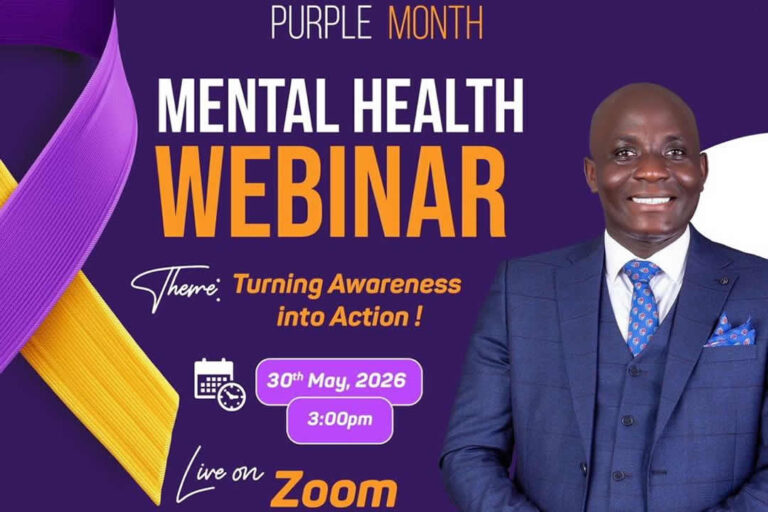
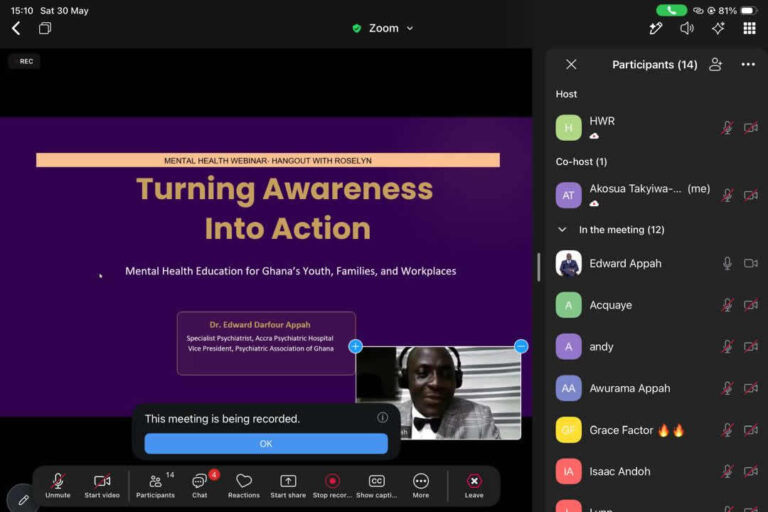
On the 30th of May, 2026, The Hangout with Roselyn convened a Mental Health Awareness Webinar as part of its Purple Month engagements. Held live on Zoom, the session brought together participants from across the country for a focused, honest, and practical conversation on mental wellbeing. The webinar was themed “Turning Awareness into Action,” a deliberate reminder that awareness carries little value unless it moves people toward real change in how they care for themselves and for one another.
The programme opened with prayer, followed by a warm welcome, a participant check in, and an address by our Convenor, Madam Roselyn. This report captures the key insights shared during the session and serves as a lasting record for those who joined us and for those who were unable to attend.
The Resource Person
The webinar was led by Dr. Edward Darfour Appah, a Specialist Psychiatrist at the Accra Psychiatric Hospital and Vice President of the Psychiatric Association of Ghana for the 2025 to 2027 term. Drawing on his clinical experience and deep understanding of the Ghanaian context, Dr. Appah presented the subject in a manner that was clear, relatable, and grounded in everyday realities. His delivery struck a careful balance between medical accuracy and practical guidance that participants could apply immediately.
Why Purple Month Matters
Dr. Appah opened by explaining the significance of Purple Month. The colour purple symbolises dignity, strength, hope, and restoration, values that sit at the heart of every meaningful conversation about mental health. He emphasised that the month presents an important opportunity to reduce the stigma surrounding mental illness, encourage help seeking behaviours, promote compassionate conversations, and guide people toward support and recovery.
Understanding Mental Health
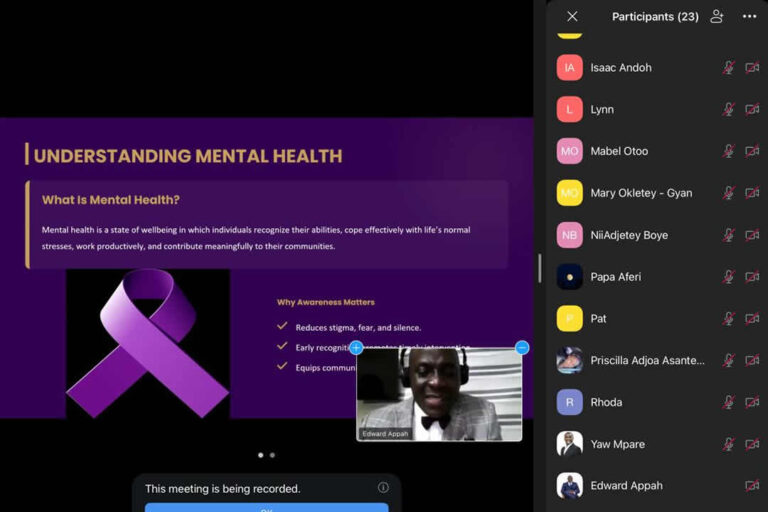
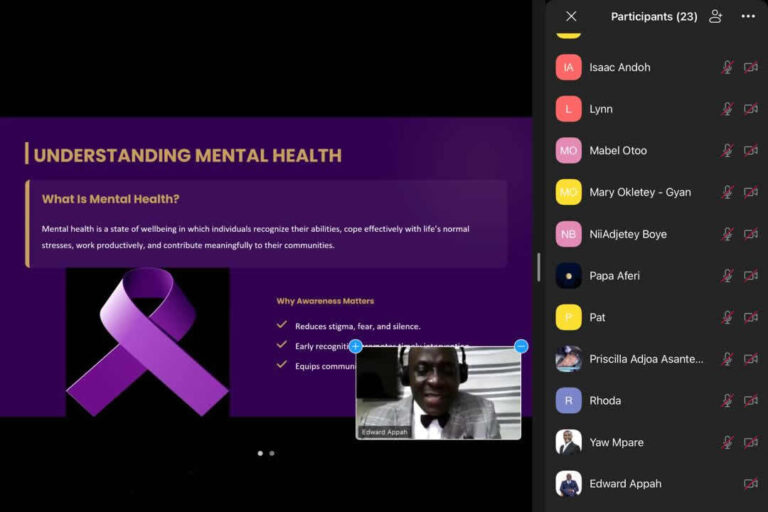
Mental health, Dr. Appah explained, is a state of wellbeing in which individuals recognise their abilities, cope effectively with the normal stresses of life, work productively, and contribute meaningfully to their communities. He stressed that awareness matters because it reduces stigma, fear, and silence, promotes early recognition that leads to timely intervention, and equips communities to prevent crises rather than merely respond to them.
Mental Health Exists on a Spectrum
One of the most valuable points raised was that mental health is not a fixed or permanent condition. It exists on a spectrum along which people move throughout their lives. Dr. Appah described three broad positions on this spectrum:
◦ Thriving: characterised by high wellbeing, resilience, productivity, and healthy relationships.
◦Struggling: functioning outwardly while experiencing chronic stress or reduced vitality.
◦In Crisis: experiencing significant distress, impaired functioning, or requiring professional intervention.
The key message was that mental health is dynamic. Where a person stands today is not where they are destined to remain, and movement toward wellbeing is always possible with the right support.

Types and Classification of Mental Illness
Dr. Appah explained that mental illnesses are classified according to symptom patterns, severity, and their impact on daily functioning. He outlined the major categories:
• Mood Disorders, including depression and bipolar disorder.
• Anxiety Disorders, including generalised anxiety disorder, panic disorder, and social anxiety.
• Neurodevelopmental conditions, including ADHD and autism spectrum conditions.
• Trauma and Stressor related conditions, including post traumatic stress disorder and adjustment disorders.
• Eating Disorders, including anorexia, bulimia, and binge eating.
• Substance Use conditions involving alcohol, drugs, and prescription medication.
He drew particular attention to bipolar disorder, describing it as a condition marked by alternating episodes of elevated or irritable mood and clinical depression that can affect relationships, judgment, and occupational functioning. He reassured participants that early diagnosis and consistent, long term treatment significantly improve outcomes and stability. Throughout, his message was firm and compassionate: these are health conditions, not personal failings or character flaws.
Mental Health in the Ghanaian Context
Dr. Appah offered a balanced view of mental health in Ghana, acknowledging both our strengths and our emerging challenges. On the side of protection, he pointed to strong family systems, community support networks, spiritual and faith based engagement, and a deep sense of cultural resilience and identity.
He at the same time, cautioned against emerging risks that threaten mental wellbeing, including rapid urbanisation, social isolation driven by digital connectivity, mounting economic pressures, and excessive digital exposure among young people. His key recommendation was clear: we must protect and strengthen the protective systems that already serve us well, while thoughtfully adapting to the demands of modern life.
Protective Factors
Building on this, Dr. Appah highlighted several factors that safeguard mental wellbeing within our society:
• Spirituality, which provides hope, meaning, belonging, and emotional support.
• Communal living, where extended family and networks reduce emotional isolation.
• Routines, where structured daily habits promote emotional stability.
• Cultural identity, where connection to culture and values strengthens resilience during adversity.
The Neurobiology of Stress
The session also explored what stress does to the body and mind. Dr. Appah explained that chronic stress affects the brain regions responsible for emotional regulation and attention, impairs decision making and memory processing, and, when left unmanaged, leads to dysregulation, burnout, and increased vulnerability to depression. His conclusion was direct and worth repeating: stress management is not a luxury but a genuine health necessity.
Technology, Young People, and the Youth Action Plan
Given the growing role of technology in daily life, Dr. Appah addressed the effects of early and excessive smartphone exposure. He noted that it can affect attention span, sleep quality, and social development, that constant digital stimulation may raise baseline anxiety, and that it reduces restorative rest. Importantly, he framed technology as a tool, reminding participants that the boundaries we set determine whether it serves us or harms us.
For young people, and truly for everyone, he offered a set of practical daily strategies:
• Reduce screen exposure before bedtime.
• Be intentional with social media use rather than scrolling without purpose.
• Maintain healthy sleep routines.
• Make time for breathing exercises, mindfulness, or prayer.
• Nurture supportive peer and family bonds.
The guiding principle behind these habits was simple but powerful: small, consistent habits create long term emotional resilience.
Mental Health in the Home
Some of the most moving parts of the session focused on the family. Dr. Appah reminded participants that children learn emotional regulation by observing the adults around them, which places real responsibility on parents and caregivers to model calm and healthy responses to stress. He encouraged key parenting practices such as acknowledging and validating emotions, encouraging open communication, maintaining regular routines and healthy nutrition, and reducing overstimulation and processed foods.
He also drew attention to childhood mental health risks, noting that many young children experience emotional or behavioural difficulties linked to caregiver stress, inconsistent routines, adverse home environments, and limited emotional support. His encouragement was that early support and intervention meaningfully improve developmental outcomes.
Maternal Mental Health
Dr. Appah raised the often overlooked subject of maternal mental health. He explained that postpartum conditions are common but frequently underrecognised, that they involve both biological changes and social stressors, and that they directly influence infant development and parent child bonding. A mother’s wellbeing, he stressed, affects family functioning and long term child outcomes, making this an area that deserves far greater attention and compassion.
Mental Health in the Workplace
Turning to the world of work, Dr. Appah introduced the concept of presenteeism, a reality many people live with quietly. This occurs when employees are physically present at work while mentally overwhelmed or exhausted, resulting in reduced concentration, poor decision making, and lower productivity or errors. His message to employers and organisations was clear: supporting mental wellbeing is not merely an act of kindness but a sound economic and organisational investment.
Interaction and Engagement
The session was highly interactive. Participants engaged openly through the chat and during the question and answer segment, raising real concerns and sharing perspectives on stigma, cultural beliefs about mental illness, and the everyday pressures affecting young people. The honesty of the conversation reflected exactly the kind of safe, judgment free space The Hangout with Roselyn seeks to create.
Closing Message
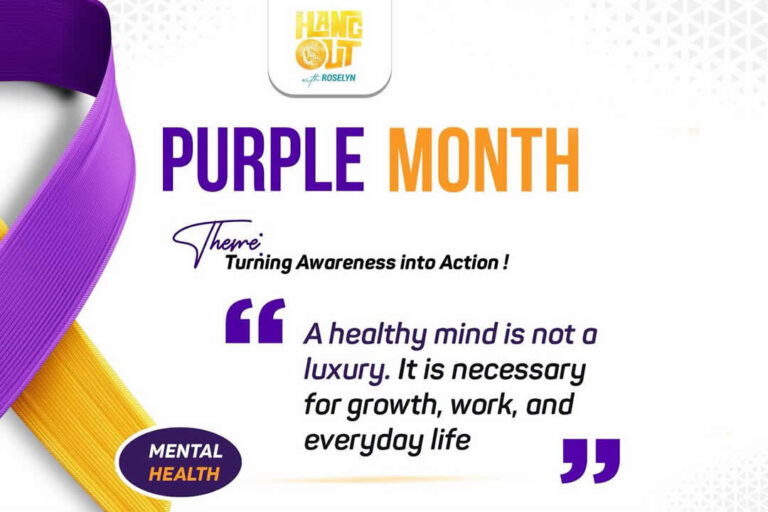
As the session drew to a close, one message stood at its centre: mental health is not a luxury; it is a necessity.
Participants were encouraged to continue checking on one another, to speak openly about mental health, to seek help when needed, and to support those around them with kindness and compassion. Above all, the closing reminder captured the spirit of the entire webinar: awareness must lead to action.
Acknowledgements
We extend our sincere gratitude to our Convenor, Madam Roselyn, and the entire Hangout with Roselyn team for making this webinar possible. Our deep appreciation goes to Dr. Edward Darfour Appah for his generosity, expertise, and warmth throughout the session. We also thank all who supported the programme flow, from the opening prayer to the vote of thanks, and every participant who joined us and contributed to such a meaningful conversation.